
Demographic shifts are driving strong growth in senior living, with the 65-and-over population reaching historic levels. Senior living communities planning for long-term growth are increasingly relying on technology to strengthen staff engagement, resident satisfaction, and overall business performance.
As demand increases, many senior living operators are discovering that their existing systems, processes, and staffing models were not designed to scale. Disconnected technologies, manual workarounds, and limited data visibility create friction for staff and make it harder for leadership teams to make timely, confident decisions. Without a more intentional technology plan, growth can quickly introduce risk rather than resilience.
Organizations that fail to develop a proactive IT strategy, including AI-based tools, will find themselves falling behind in the race to meet the demands of the coming decade and beyond.
Streamlining Operations in Senior Living Through Technology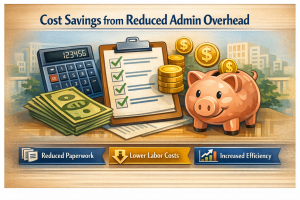
The good news is, the majority of senior living operators recognize the importance of investing in technology to optimize processes.
Streamlining operations isn’t about adopting more tools; it’s about ensuring technology supports the full operating model. Aligning systems across clinical, financial, and workforce functions creates a foundation for efficiency, insight, and scalable growth.
Efforts to move these functions from paper and fragmented systems to interoperable digital platforms facilitates the use of aggregated data to ensure more personalized and effective care delivery, representing a valuable line of sight into safer, more efficient, and highly effective care that is not possible with manual workflows.
How Digital Health Technology is Revolutionizing Resident Care in Senior Living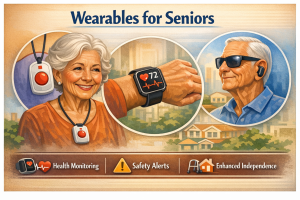
As senior living communities expand their technology use, leveraging it to improve the quality of resident care is proving valuable. Today’s senior living residents expect concierge service: amenities, responsiveness, and services that foster maximum autonomy and independence.
Solutions ranging from telemedicine to wearables and remote monitoring devices offer simplified healthcare delivery. Predictive analytics through AI support early identification of health concerns before they can worsen: one trial demonstrated a reduction in hospital admissions by more than 50%. Tools that allow residents to easily access community activities and schedules, communicate updates to loved ones, and provide reminders for appointments or medications elevate their experience and safety.
As a result, better outcomes can be measured in areas such as resident satisfaction, quality of life, and reduced hospital readmissions.
Leveraging Technology to Improve Staff Productivity and Retention 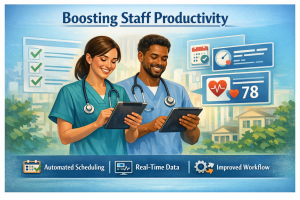
Staff productivity and retention represent one of the most meaningful impacts of technology in senior living. In an era of record staffing shortages, senior living staff are often caught in an endless loop: inefficiencies reduce productivity, exacerbate workloads, lead to more burnout and turnover, and leave remaining staff struggling to do more with even less.
Technology offers streamlined workflows, automation, and digital tools that shatter these barriers and support staff productivity and satisfaction. Automating tasks such as scheduling means more time for resident care and less administrative burden. With real-time data at their fingertips, they can deliver more personalized care. Communication tools like secure apps keep staff and families alike informed and on the same page.
How Technology Improves Financial Outcomes: Cost Savings and Revenue Growth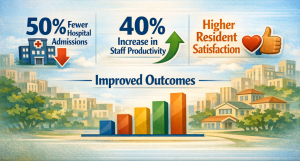
Investment in technology can be daunting, but the long-term value creation is something that can no longer be ignored. Cost savings from improved efficiency and reduced administrative overhead alone has immediate positive impact on ROI. Beyond that, larger technology benefits include more easily identifying potential opportunities for growth and revenue diversification, tracking and executing automated billing to reduce revenue leakage and reducing high turnover costs.
Additionally, technology’s effect on regulatory compliance is a critical aspect of care delivery that should not be underestimated. Automated flagging of key documentation gaps and errors can support audit preparedness. Mitigating costly compliance issues with proactive data can improve both care and cost savings. Robust data security supports HIPAA compliance, protects sensitive resident information and safeguards an organization’s reputation.
The Future of Senior Living: Embracing the Digital Health Revolution
As technology reshapes the senior living landscape, digital transformation has become essential to sustaining growth and care quality. The most successful organizations are those that approach technology as a strategic investment.
A viable technology strategy begins with evaluating what exists today, identifying integration opportunities, and ensuring new solutions work together as the organization evolves.
Hartman Executive Advisors brings deep healthcare IT expertise to help senior living leaders navigate this complexity with confidence. Contact us today for a free consultation and join us on the forefront of technology in senior living.


